

Meta has announced major changes to WhatsApp Business API billing starting October 1, 2026. These changes will affect how Indian SMBs, e-commerce brands, and enterprises manage messaging costs, customer service, and marketing budgets.
Understanding the new pricing early can help businesses review their message templates, improve customer communication, and avoid unexpected costs.
Quick Answer: What is changing on October 1, 2026?
From October 1, 2026, Meta transitions from 24-hour conversation-based billing to a per-message delivery billing model for Utility templates and free-form Service (support) responses. Concurrently, Meta is introducing an updated regional rate card across Marketing and Utility message categories for Indian business accounts.
What Changes on October 1, 2026
Earlier, Meta charged businesses for a 24-hour conversation window after a conversation started. From October 1, 2026, Meta will move to a more detailed per-message pricing model for specific message categories.
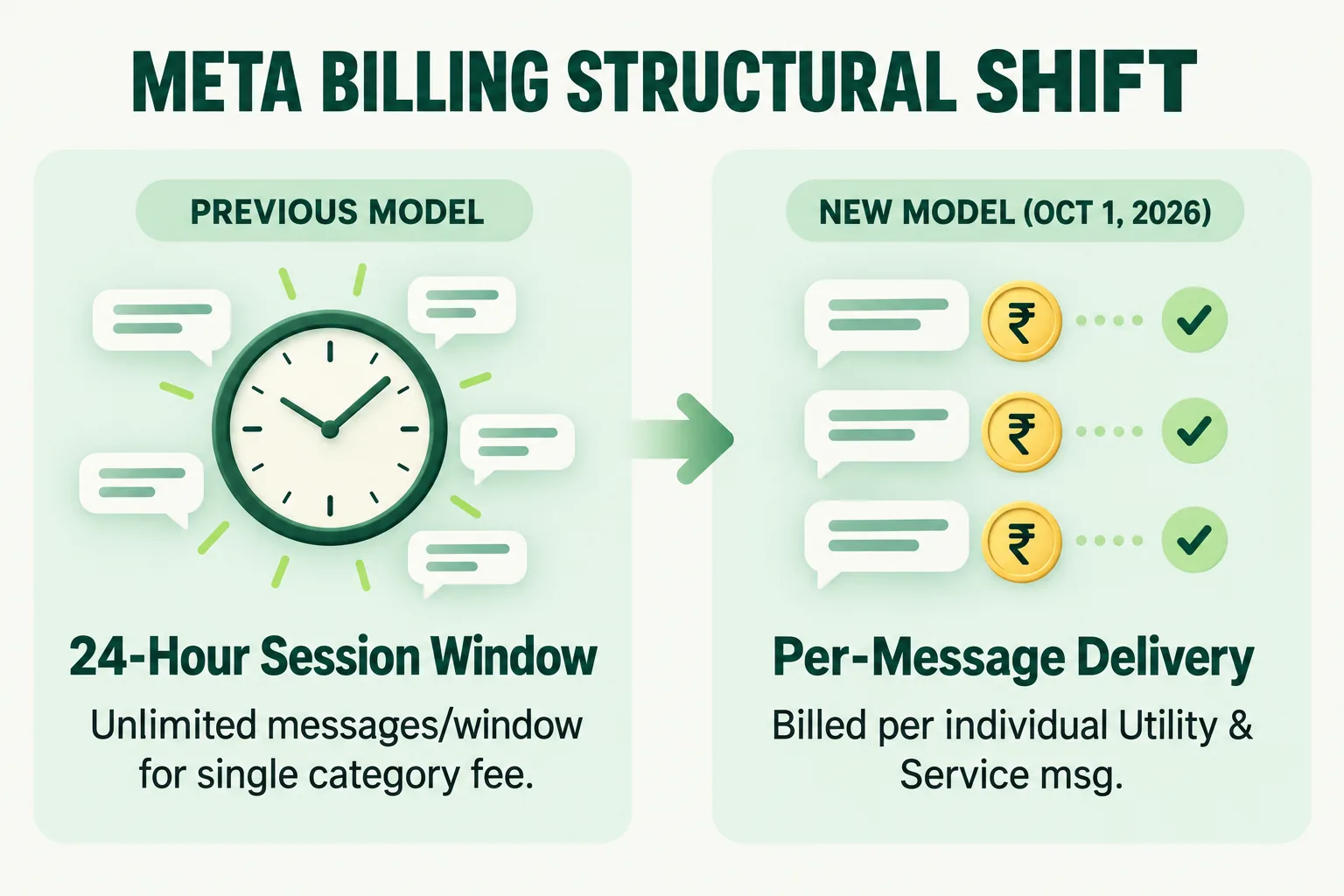
From Per-Conversation to Per-Message Billing
Under the new framework, sending multiple Utility updates or issuing multiple customer support replies will no longer be bundled inside a single 24-hour session fee. Instead, every individual Utility template delivered and every free-form Service reply sent by a human agent or automated bot will trigger a per-message charge.
Utility Templates and Service Messages Affected
- Utility Templates: Order confirmations, shipping tracking updates, billing receipts, and account notifications will now incur a per-message delivery fee every time a template is sent.
- Service Conversations: Inbound customer support queries and subsequent agent replies will be billed per individual response message rather than an all-inclusive 24-hour service window.
- Marketing Templates: Marketing broadcasts continue under per-message pricing structures with updated baseline rates per region.
What the Rate Card Increase Means for Indian Accounts
Along with the shift to per-message billing, Meta is also updating the official regional rate card for WhatsApp Business accounts registered in India.
- Adjusted Utility Costs: Since Utility messages will be charged per delivery, businesses sending frequent transaction updates such as order confirmation, dispatch, transit, and delivery notifications may need to consolidate messages and templates to manage costs.
- Refined Marketing Rates: Rates for promotional broadcasts, discount offers, and retargeting campaigns are also being adjusted based on Meta’s updated pricing structure.
You can also check the Meta Business Help Center Pricing Page for additional pricing information.
How to Audit Your Current Message Mix Before the Switch
To ensure a seamless transition prior to October 1, 2026, marketing and operations teams should perform an immediate audit of their messaging infrastructure:
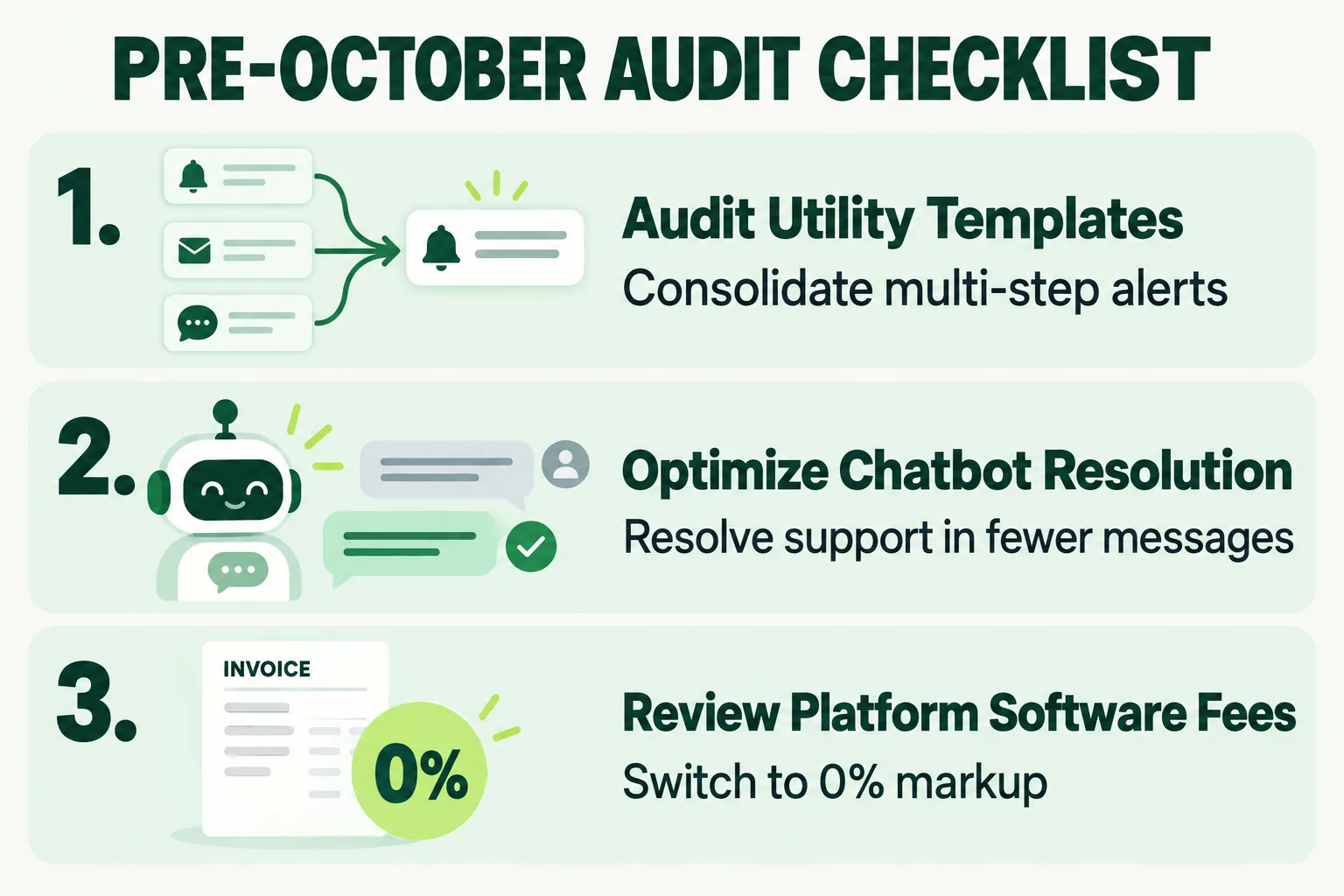
- Consolidate Utility Notifications: Merge multi-step transaction alerts into unified status messages or dynamic web portals to minimize overall template sends.
- Optimize Chatbot Dialogues: Streamline customer support flows so that dynamic AI chatbots or live agents resolve customer inquiries using fewer, high-value responses.
- Audit Vendor Pricing Transparency: Verify whether your current software provider adds hidden per-message markups on top of Meta's base rate cards.
How Wydely Is Adjusting Client Campaigns Ahead of the Change
Wydely remains committed to delivering absolute pricing clarity and software efficiency for businesses across India:
- 0% Vendor Markup Guarantee: Wydely continues to pass Meta's official base rates directly to clients with zero added per-message software fees. You can view our transparent subscription models on the Wydely Pricing Page.
- Automated Template Consolidation Tools: Utilize our no-code drag-and-drop workflow builder on our Features Overview to merge automated receipts and status tracking into single-message flows.
- Dedicated Account Support: Our specialists are actively auditing messaging logs for all enterprise accounts to ensure zero budget surprises come October 1.
For a detailed comparative breakdown of software pricing structures across Indian vendors, consult our comprehensive guide on WhatsApp Marketing Software Pricing in India.
FAQs: WhatsApp API Pricing Changes
Q1: Will marketing messages still be billed per conversation or per message?
Marketing broadcasts are billed on a per-message delivery basis. The main change on October 1, 2026, expands per-message billing to Utility and Service categories.
Q2: How can Indian SMBs prevent support costs from rising under per-message billing?
Deploying AI chatbot flows that collect customer details upfront and resolve issues within concise, single-message responses helps keep Service message volumes minimal and cost-effective.