

AI agents are becoming a bigger part of WhatsApp conversations, and Meta’s evolving AI pricing shows that businesses may increasingly use them to handle customer interactions at scale. Instead of relying only on fixed chatbot menus and rule-based replies, businesses can use AI agents to understand multi-step questions, assist with orders, qualify leads, and handle routine support within WhatsApp.
As AI-powered messaging grows, the way these interactions are priced and measured is also evolving. Meta’s introduction of AI-specific pricing and policies for WhatsApp Business Platform interactions signals that AI-driven customer conversations are becoming an increasingly distinct part of business messaging.
Quick Answer
Meta has introduced a separate pricing category for conversations initiated by an AI or LLM agent rather than a human template, signaling that agent-led messaging is being treated as its own distinct billing track on WhatsApp.
What Meta's "AI Conversations" Category Is
As WhatsApp and AI pricing change, businesses should rethink how they use and budget for chat automation.
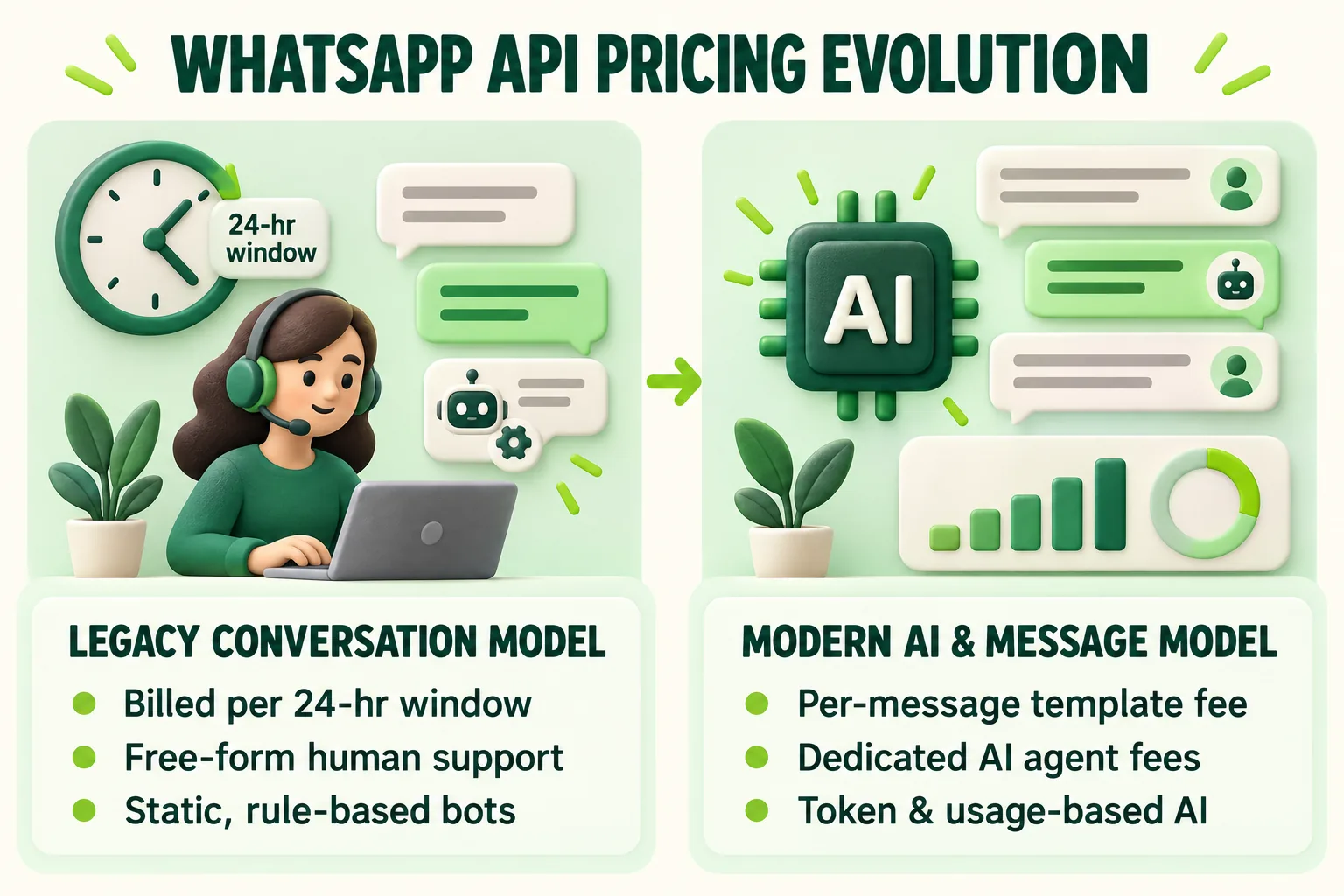
Under Meta’s expanded infrastructure:
- Resolve Faster: Design AI agents to solve queries in fewer messages, reducing unnecessary usage.
- Use Hybrid Automation: Use simple rule-based flows for FAQs and routine tasks, and AI for complex questions and sales or support.
- Track Total Costs: Consider both Meta charges and your WhatsApp provider’s fees. Transparent pricing makes costs easier to manage.
- Measure Results: Track leads, sales, and resolved queries, not just the number of messages to measure AI's actual ROI.
Why Agent-Initiated Messaging Gets Its Own Pricing Track
Meta's decision to establish dedicated pricing for AI agent interactions stems from changing usage patterns across enterprise messaging:
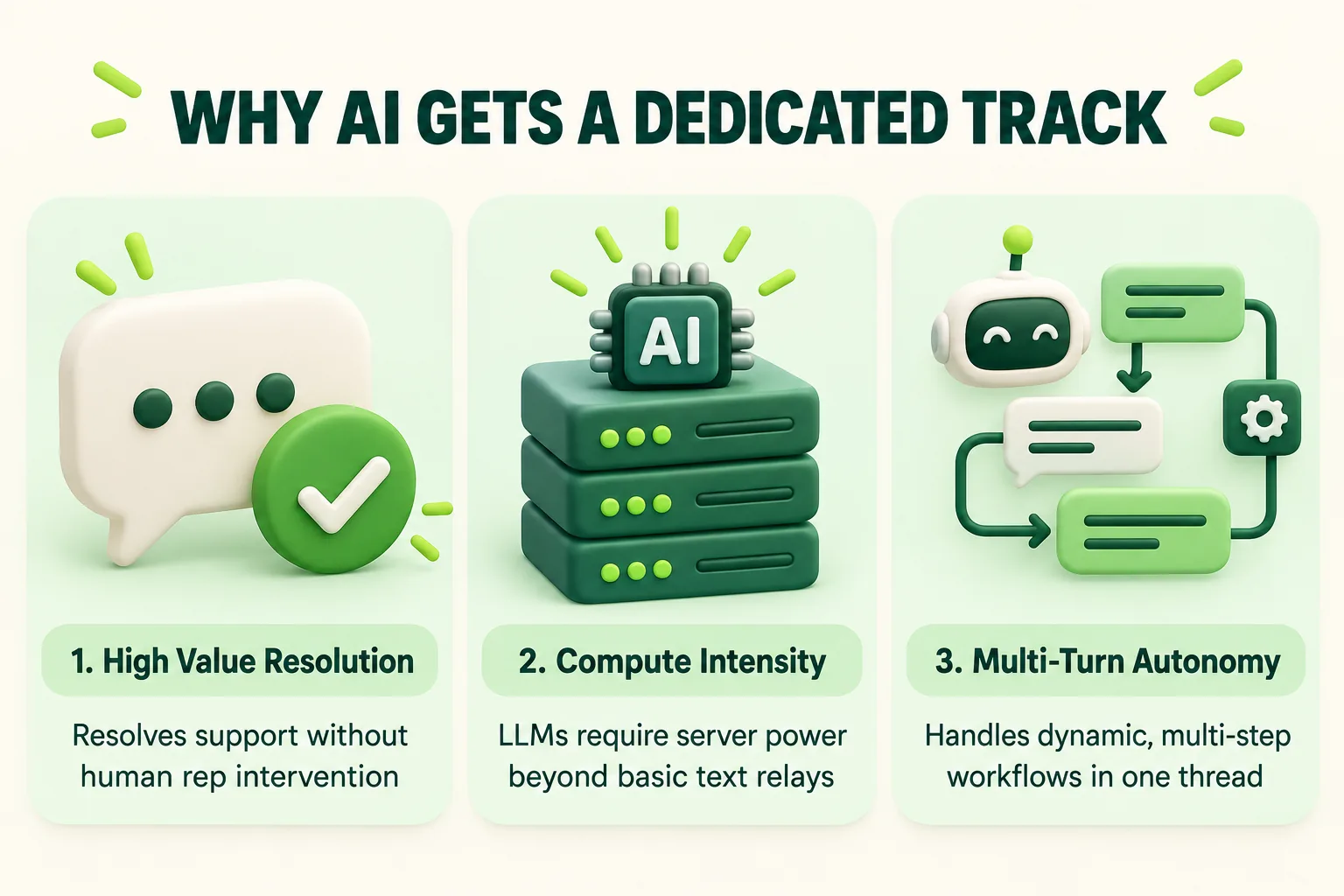
- Autonomous Support: AI agents can answer questions, recommend products, qualify leads, and handle support requests instead of simply sending predefined replies.
- Higher Computing Needs: AI agents need ongoing processing to understand customer messages and generate responses, requiring more computing resources than a simple template message.
- Different From Template Messaging: Traditional WhatsApp messages often use predefined templates, while AI agents generate responses dynamically. Separate pricing can help account for these different types of interactions.
For complete developer changelogs, API documentation, and pricing announcements, consult the Meta for Developers WhatsApp Changelog.
What This Could Mean for Chatbot Costs Going Forward
As WhatsApp messaging and AI pricing evolve, businesses may need to rethink how they design and budget for conversational automation.
- Optimize for Faster Resolution: Design AI agents to answer questions and complete tasks in fewer conversation turns. This can help control usage and improve the customer experience.
- Use Hybrid Automation: Keep simple FAQs and routine tasks on rule-based flows, while using AI agents for more complex questions, sales qualification, and support.
- Watch Your Total Costs: Consider both Meta's messaging or AI-related charges and your WhatsApp platform provider's fees when calculating the cost of automation. A provider with transparent pricing can make these costs easier to track.
- Measure ROI, Not Just Messages: Track outcomes such as qualified leads, completed purchases, and resolved support requests to understand whether AI automation is delivering business value.
How Wydely Is Positioning Its Chatbot for the AI Conversations Category
Wydely’s messaging ecosystem is built to give brands high-performance AI capabilities while keeping operational costs completely transparent:
- AI + Workflow Automation: Combine structured flows for routine tasks with AI-powered conversations for more complex customer questions, lead qualification, and support.
- Transparent Meta Pricing: Wydely passes Meta's official WhatsApp messaging charges without adding a per-message markup, helping businesses keep messaging costs predictable.
- CRM & WhatsApp Integration: Connect WhatsApp conversations with your CRM and customer data to manage leads, sales, and support from one place.
- Built for Growing Businesses: Use Wydely's WhatsApp broadcasts, automation, AI chatbot, and CRM integrations to manage customer conversations as your business scales.
Explore Wydely's WhatsApp AI chatbot to see how AI-powered conversations can fit into your customer communication strategy.
FAQs: AI Agents on WhatsApp
Q1: What is the main difference between a traditional WhatsApp chatbot and an AI agent?
A traditional WhatsApp chatbot follows predefined rules, buttons, and conversation paths. An AI agent uses an LLM to understand natural language, remember the conversation context, access external systems, and handle more complex requests.
Q2: Will third-party AI agents built on custom LLMs be charged Meta's native AI token rates?
Not necessarily. Meta's AI-specific pricing applies to the AI capabilities covered by its own pricing model. Third-party AI agents using external LLM providers, such as OpenAI or Anthropic, may instead involve standard WhatsApp messaging charges plus the costs charged by the chosen AI provider. The exact costs depend on the AI and WhatsApp services being used.